
Addiction and Recovery
Stolen WanderBill’s struggle shows the difference between a brief sober interval, formal treatment, and the ongoing work of recovery.
increasing Bearing strength in each event
 decreasing
Bearing strength in each eventdecreasingThe Body in Withdrawal
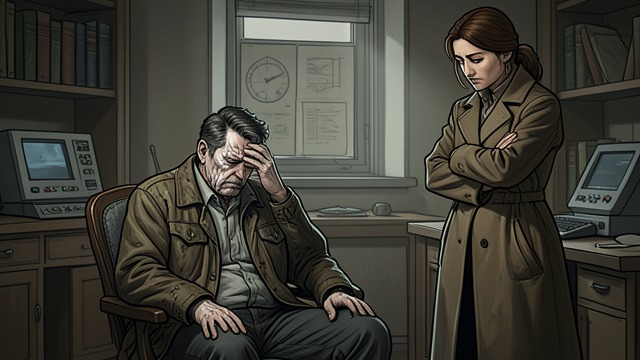
The Body in Withdrawal
Sobriety’s physical cost
Bill is not drunk, yet he shakes, looks exhausted, and complains of a severe headache. His condition reveals the bodily difficulty of stopping alcohol after sustained dependence.
Recovery not assumed
Nancy agrees to drive him but remembers his past short sober spells. She does not mistake the immediate absence of drinking for a settled recovery.
The scene portrays sobriety as a process rather than a switch. Bill’s body and Nancy’s distrust both carry evidence of how long the addiction has shaped their lives.
A Sober Conversation Fails

A Sober Conversation Fails
A daughter takes a risk
Nancy tells Bill about the pregnancy because she hopes sobriety will allow a different response. She offers him an opportunity to meet her news without alcohol clouding the exchange.
Harm persists
Bill responds with anger and pressure, showing that abstinence alone has not repaired his habits of judgment and control. Nancy orders him out of the car.
The failure matters because it prevents recovery from becoming a simplistic cure-all. The effects of addiction extend into trust, communication, and the relationships that must be rebuilt afterward.
Treatment as Structure

Treatment as Structure
A longer commitment
Bill says he has arranged a year at a rehabilitation center, including three months without outside contact. The plan provides a structured alternative to his previous brief attempts.
Harm acknowledged
He connects his addiction to the suffering Nancy experienced as a child. His apology indicates that recovery will also require confronting what his drinking did to others.
Treatment supplies a framework, but it cannot guarantee an outcome. The story leaves space between entering a program and rebuilding the family’s trust.
Sobriety Practiced Over Time

Sobriety Practiced Over Time
A sustained interval
Bill tells Nancy he has not touched alcohol for eleven months. The length of time exceeds his previous efforts and gives the family a new basis for cautious optimism.
Re-entering ordinary life
He is looking into security work and wants to return to responsibility. His attention shifts from merely stopping drinking to building a life that can support recovery.
The reported progress suggests genuine effort without closing the question of what comes next. Recovery must continue outside the protected structure of treatment.
Recovery and Reconnection
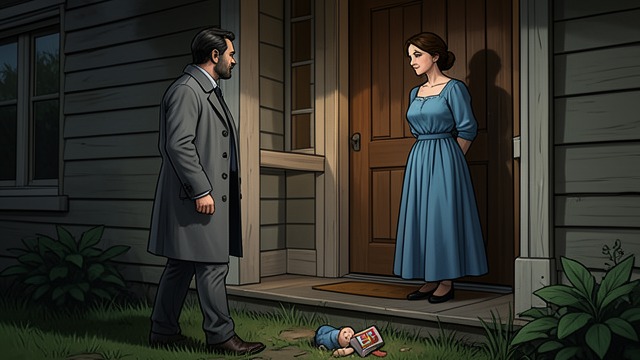
Recovery and Reconnection
Asking rather than assuming
Bill asks Nancy whether he may visit after leaving treatment. He recognizes that his daughter has the right to decide whether contact is welcome.
A limited opening
Nancy tells him a future visit should be fine. She does not make the call a full reconciliation, but she no longer closes the door.
The relationship’s new possibility depends on continuing sobriety and respect. Recovery is shown not only as abstinence but as a chance to approach others without demanding forgiveness.
On the morning of the hardware-store trip
At the hardware-store parking lot
During Bill’s visit to Nancy’s apartment
The eleven months preceding the wedding
The day before Nancy’s wedding
